
In the heart of Monfragüe National Park lies Villarreal de San Carlos, a small village surrounded by nature that has become one of the main reference points for visitors to this protected area.
More than just a place to pass through, Villarreal is an excellent base for organising a visit to Monfragüe, starting some of its hiking routes and learning more about the park’s history, wildlife and landscapes.
Its small streets, natural surroundings and centres dedicated to interpreting Monfragüe make it well worth stopping here before continuing your exploration of the National Park.
From the bandits of Monfragüe to Charles III
The origins of Villarreal de San Carlos are closely linked to one of the most curious episodes in the history of Monfragüe.
During the 18th century, the road connecting Plasencia and Trujillo crossed a difficult and sparsely populated area. The section between Puerto de la Serrana and Puente del Cardenal was particularly problematic because of the presence of highwaymen and bandits.
To improve the security of this important route, King Charles III promoted the creation of a settlement here. The new village included facilities such as a church, a fountain and military quarters, although it never developed into a large population centre and remained linked to Serradilla.
This origin helps explain the character of Villarreal: a small settlement strategically located along one of Monfragüe’s most important historic routes.
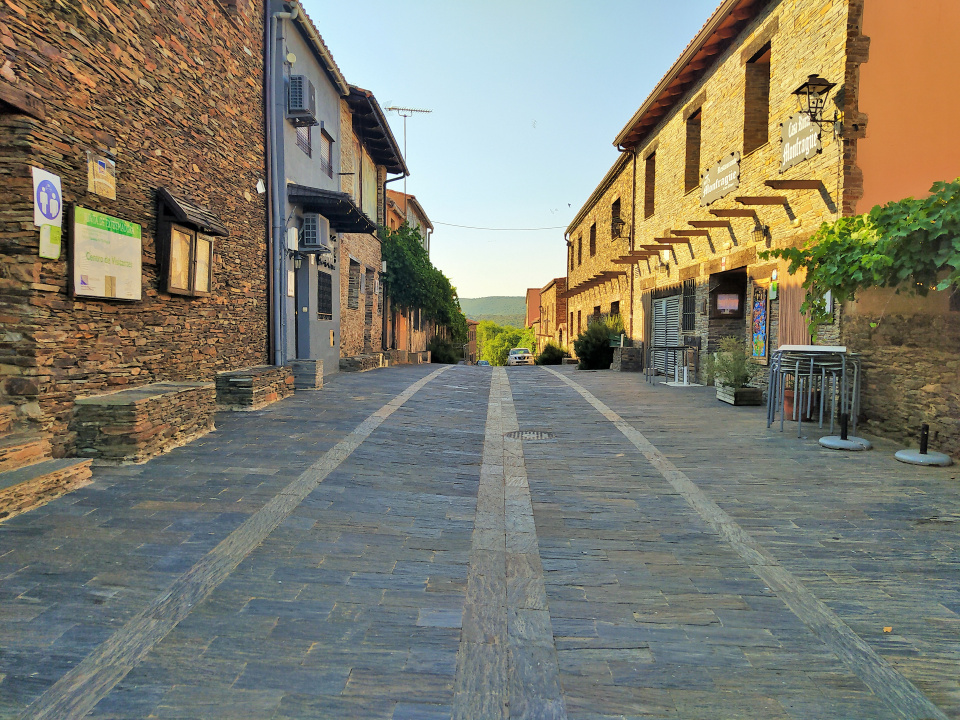
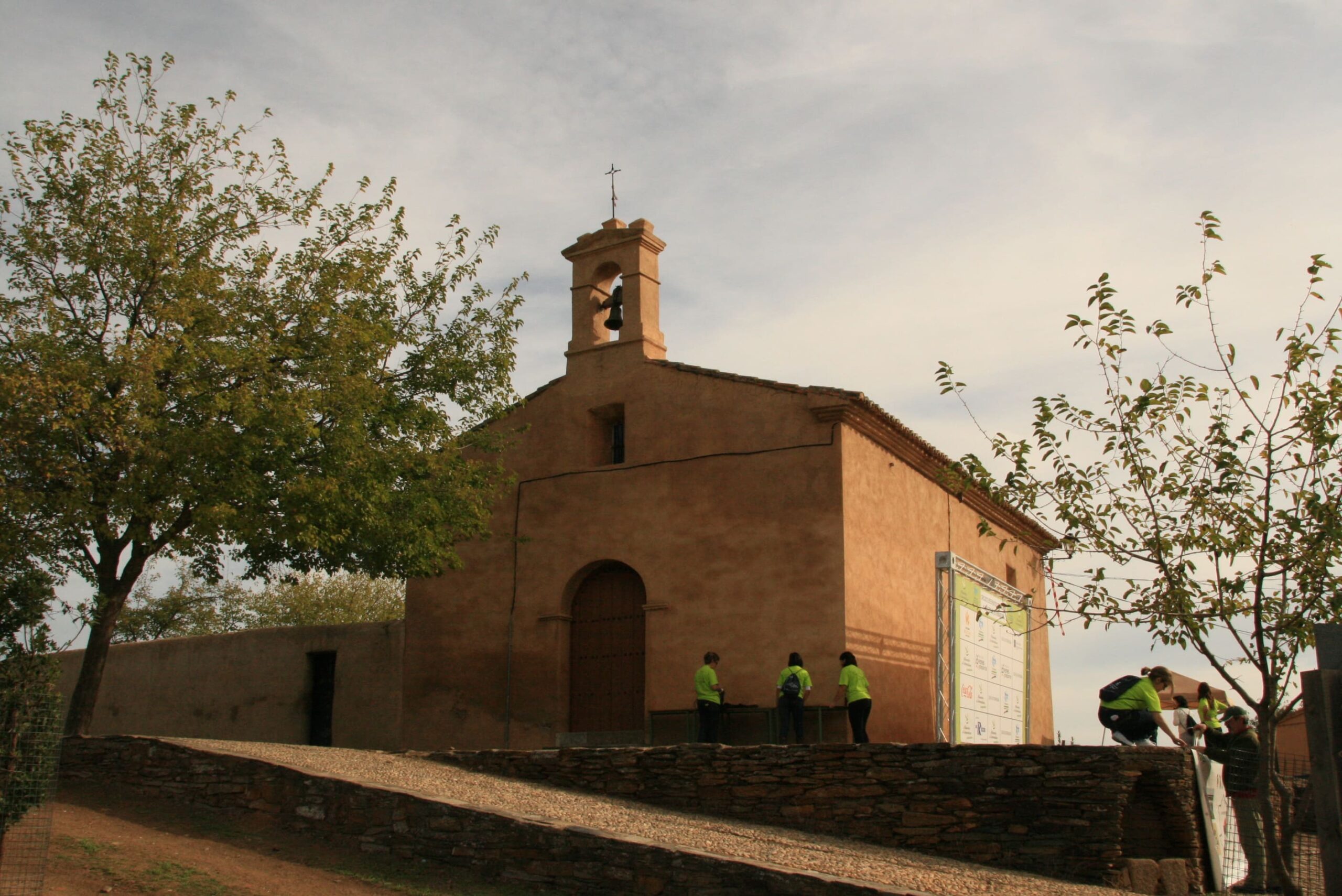
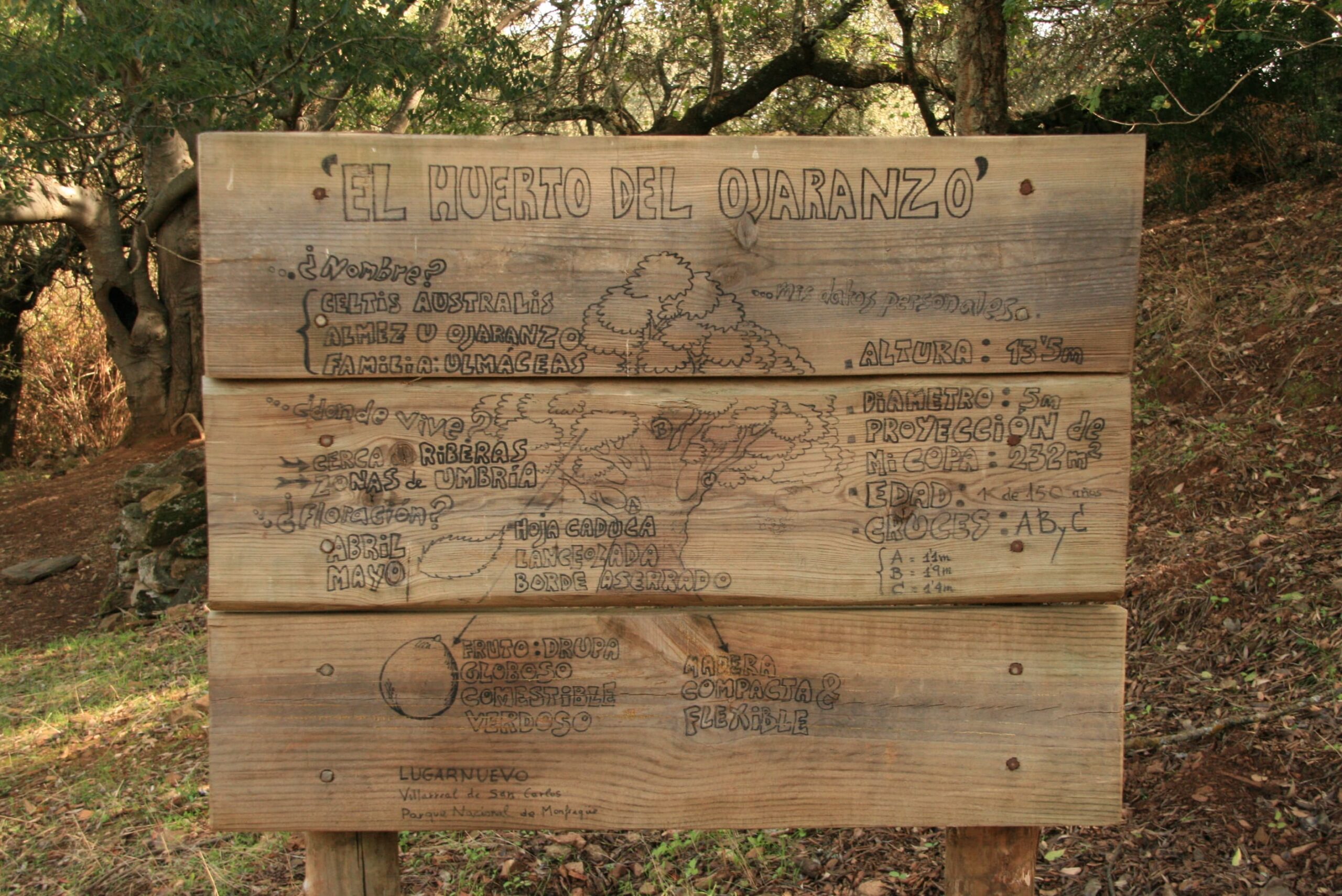
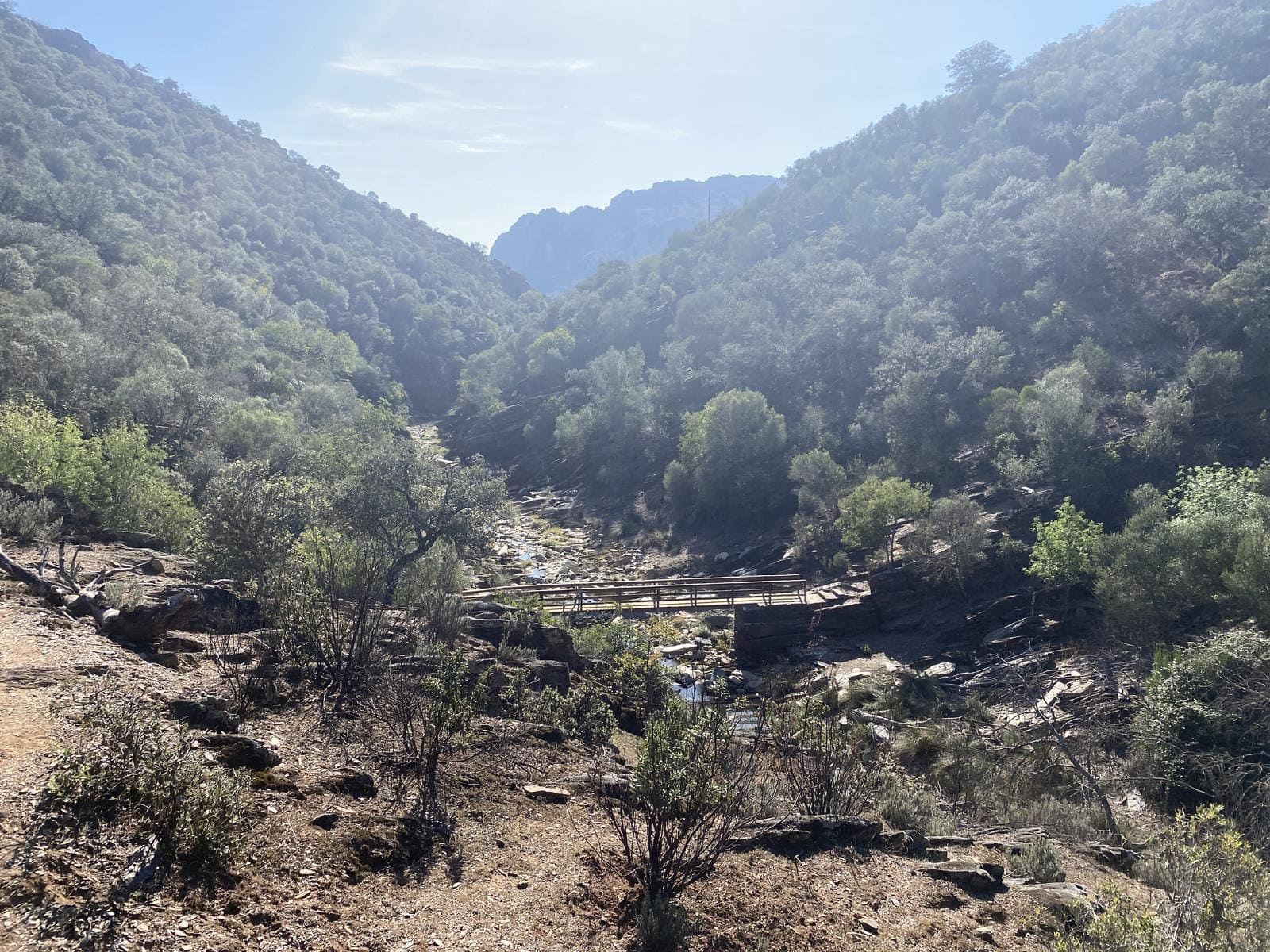
Villarreal de San Carlos, starting point for hiking routes in Monfragüe
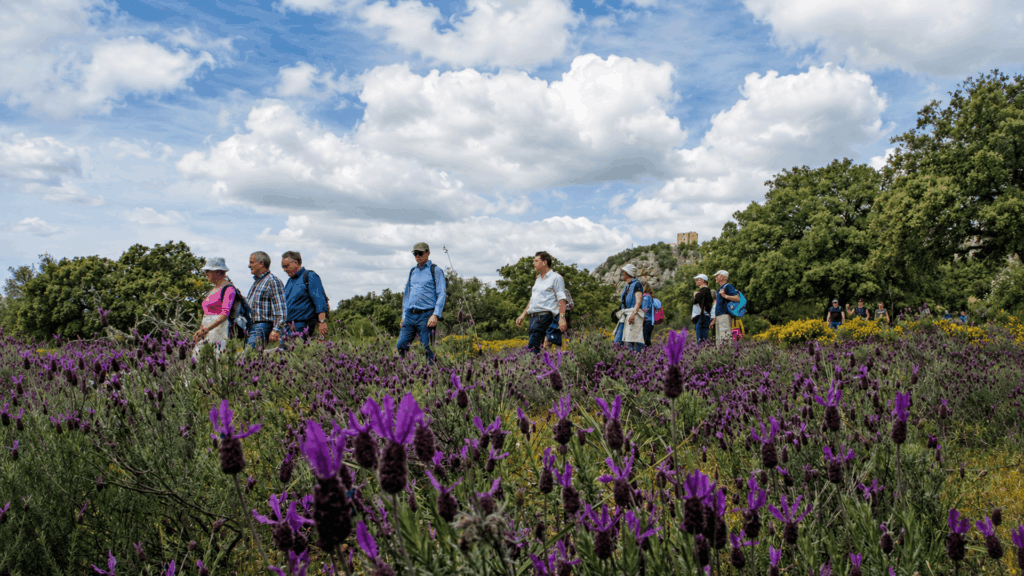
Another major reason to visit Villarreal de San Carlos is that some of the National Park’s most interesting routes start in its surroundings.
The village makes it easy to combine a cultural visit with hiking and nature watching.
Red Route
The Red Route between Villarreal de San Carlos and Monfragüe Castle is one of the park’s most complete itineraries. The full official route covers 16 kilometres there and back, with an estimated duration of around five hours and a moderate difficulty level.
Green Route
For those looking for a shorter alternative, the area around Malvecino Stream and Cerro Gimio offers the chance to discover forests, streams and magnificent panoramic views of the Monfragüe landscape.
Views from Monfragüe Castle
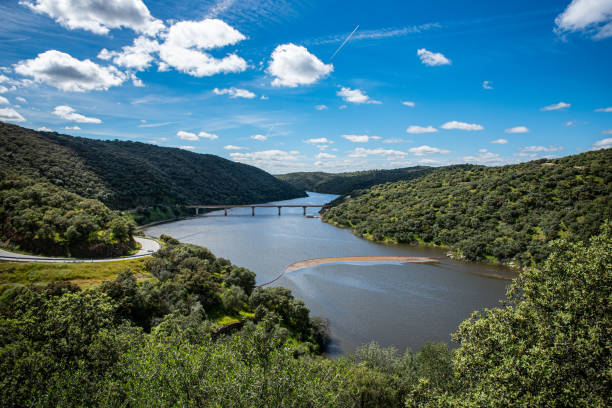
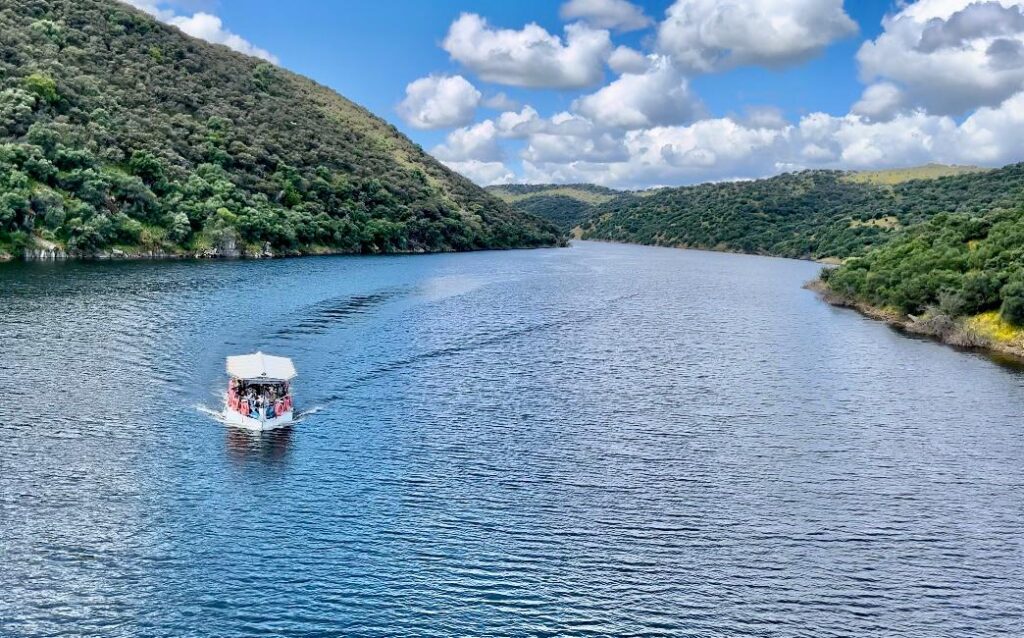
The main reward of the climb comes when you reach the upper part of the castle. From here, you can enjoy one of the most complete panoramic views of Monfragüe National Park, with mountain ranges covered in Mediterranean vegetation and the Tagus River winding through the valley below.
The elevated position makes it easier to understand Monfragüe’s distinctive geography and see how its rivers cut through the mountain ranges. Several of the park’s most important natural landmarks can also be seen from this area.
Monfragüe is also one of Europe’s great birdwatching destinations. Griffon vultures, cinereous vultures, Egyptian vultures, black storks and Spanish imperial eagles form part of the extraordinary birdlife of the National Park.
Tip: bring binoculars if you have them. From the park’s higher viewpoints, they can become one of your best companions.
A perfect place to observe nature
Villarreal de San Carlos is completely integrated into the Monfragüe landscape. From the village, it is easy to reach areas of Mediterranean forest, dehesa, streams, mountain ranges and dramatic rocky cliffs.
Its location also makes it easy to visit some of the park’s best-known wildlife spots, such as Salto del Gitano, where the flight of griffon vultures is one of Monfragüe’s most characteristic sights.
How much time should you spend in Villarreal de San Carlos?
If you only want to explore the village and visit the Visitor Centre, allow approximately one or two hours.
However, Villarreal works better as a starting point than as an isolated visit. If you add a hiking route, Monfragüe Castle, Salto del Gitano and some of the main viewpoints, you can easily spend a full day in this part of the park.