
Discovering Monfragüe with a guide allows you to notice many details of the area that can easily go unnoticed when visiting independently. Landscapes, wildlife, vegetation, traditions and ways of life take on a different meaning when someone helps you interpret what you are seeing.
Guided tours provide an opportunity to explore both Monfragüe’s natural areas and its rural heritage, discovering the close relationship between the Mediterranean landscape and the people who have lived in and made use of this land for generations.
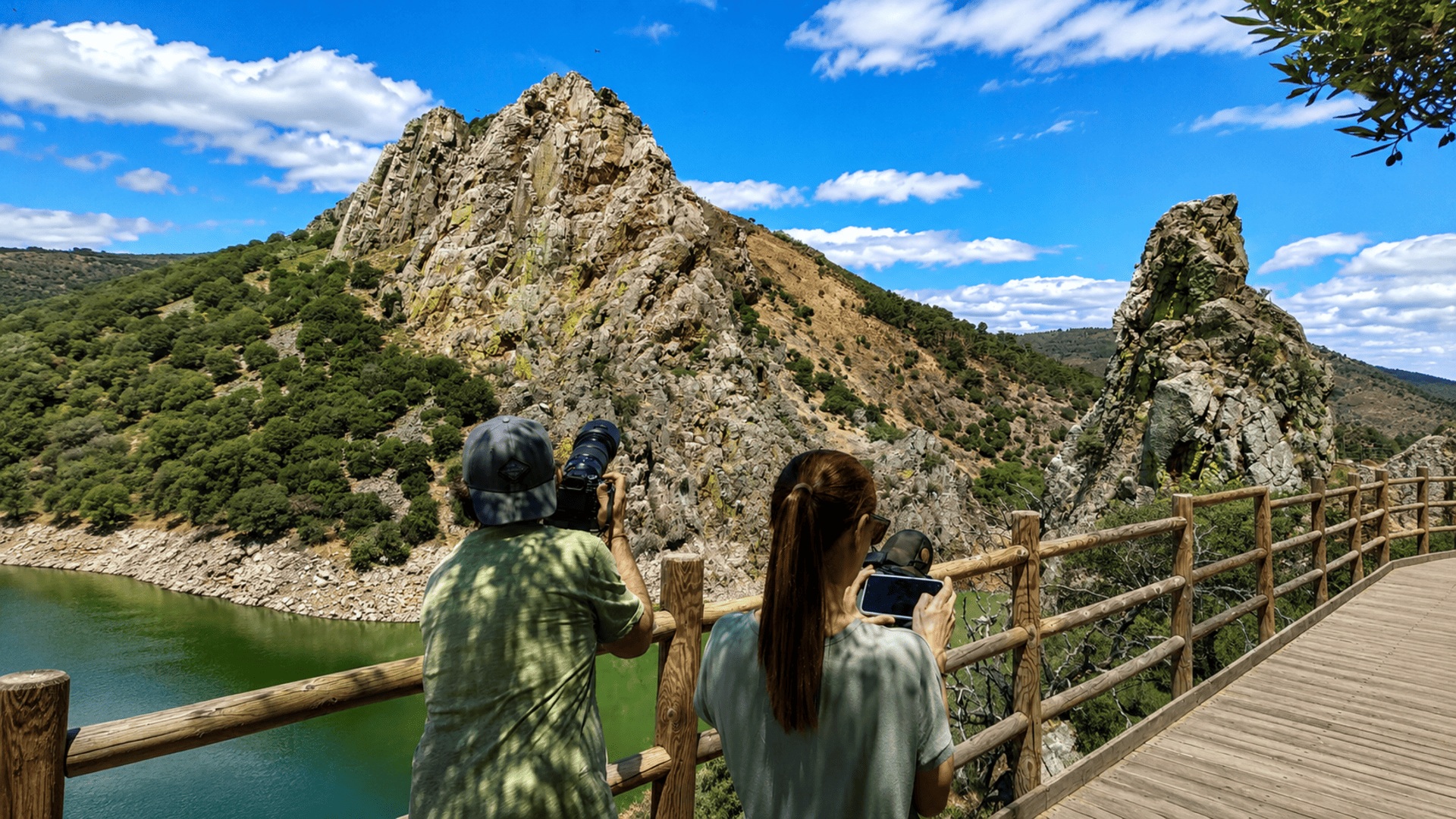
Guided interpretive tour
Area: Monfragüe and surroundings
Landscape interpretation
Nature and wildlife watching
Visiting a natural area is about much more than simply admiring the scenery.
A guide can explain why certain tree species grow in particular places, help identify animal tracks, interpret the shape of the terrain and show how traditional activities have influenced the landscape we see today.
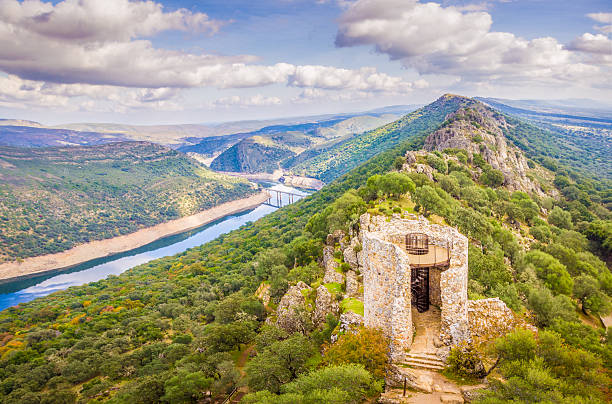
During the tour, every element can become a small story: a centuries-old holm oak, a stone wall, a grazing area or a bird of prey soaring overhead can all help us better understand the identity of Monfragüe.
Much more than a conventional tour
Nature
Monfragüe is home to extraordinary biodiversity. A guided tour provides an opportunity to learn how to identify species, understand different ecosystems and discover how Mediterranean landscapes function.
Traditions and rural life
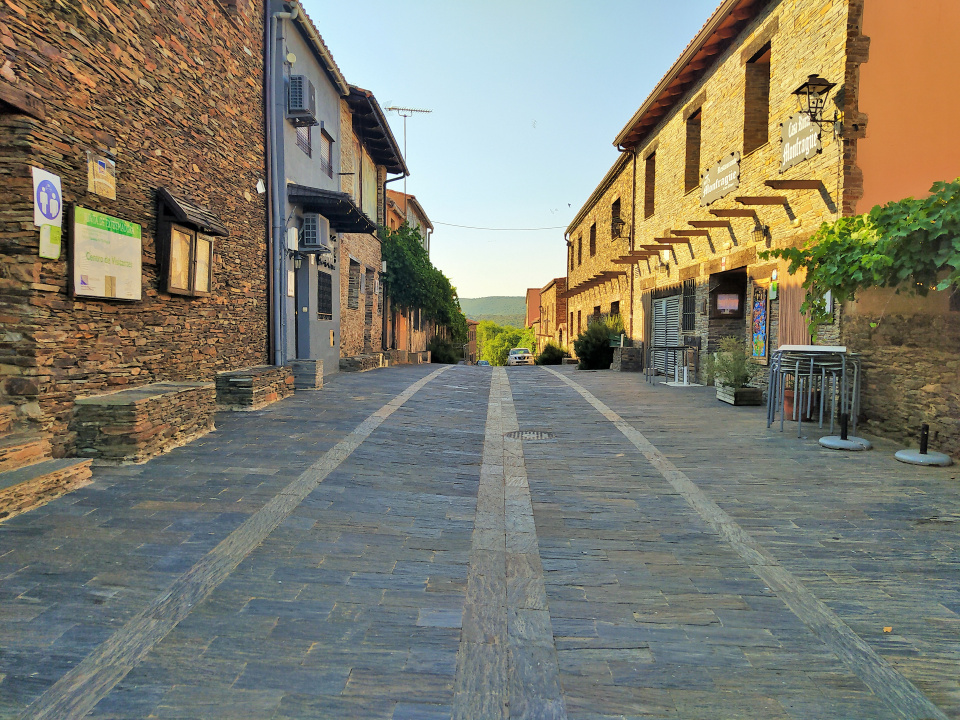
Extensive livestock farming, cork harvesting, grazing and other traditional activities form part of the history of this territory and continue to shape its landscapes today.
Heritage
The tour can also introduce visitors to the history, culture and emblematic places surrounding Monfragüe, complementing the natural experience with a broader understanding of the area.
The dehesa: a landscape full of stories
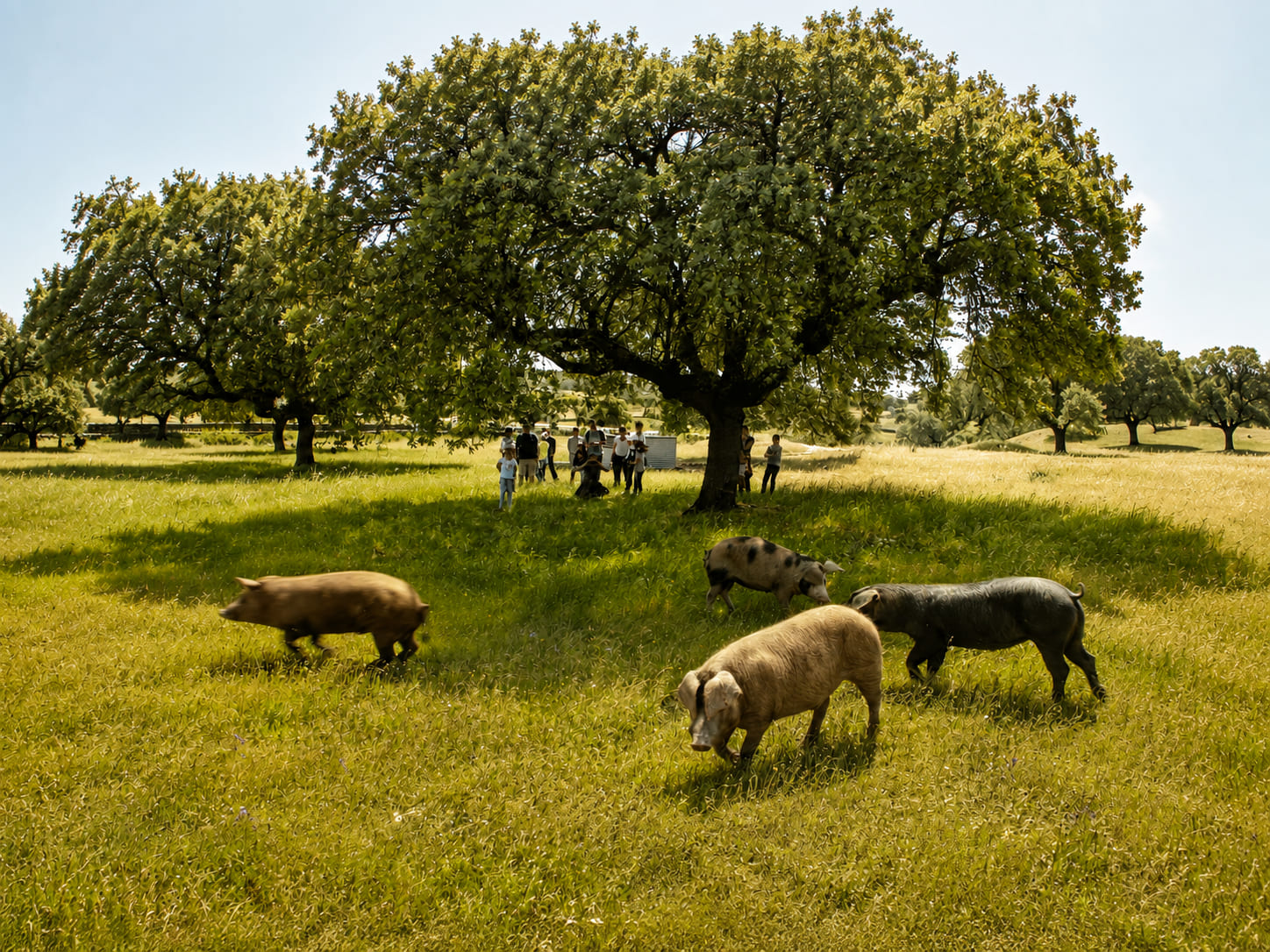
The dehesa is one of the most characteristic landscapes of Extremadura and one of the best examples of the historic relationship between nature and human activity.
Holm oaks and cork oaks coexist with grasslands, livestock and a rich diversity of wildlife. Behind this seemingly simple landscape lies a complex traditional land-management system that has allowed production and conservation to coexist for generations.
Some guided tours offer the opportunity to discover activities related to farming, livestock and dehesa management at close quarters. Depending on the season, visitors may see activities such as grazing, sheep shearing, pruning or cork harvesting. The Descubre la Dehesa experience by Verdehesa, for example, takes place on a private estate in Torrejón el Rubio, within the Monfragüe Biosphere Reserve, and adapts part of the experience to the seasonal work taking place at the time.
Wildlife and biodiversity
During a visit around Monfragüe, you may also encounter some of its most characteristic species.
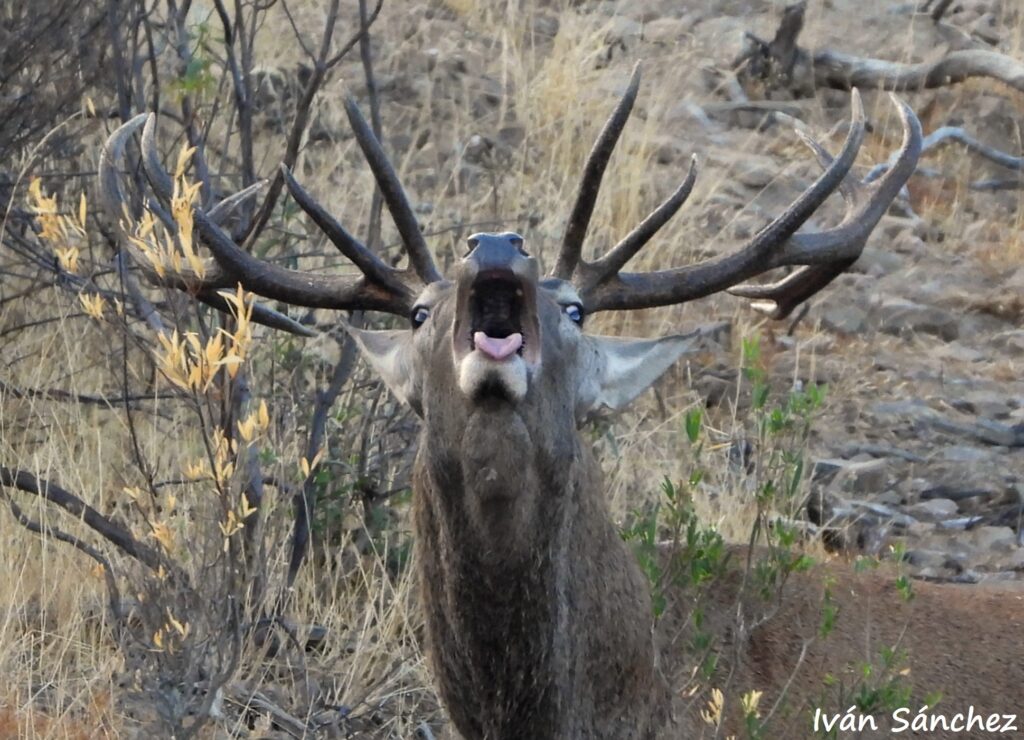
Griffon vultures, cinereous vultures, eagles and Egyptian vultures can often be seen in the sky, while deer, fallow deer, wild boar and numerous smaller animals can be found in the dehesas and woodland.
Having a guide makes it easier to identify species and, above all, to discover signs that would normally go unnoticed: footprints, feeding remains, sounds and tracks on the ground.
Tips for enjoying your visit
Wear comfortable footwear. Even if the route is easy, some sections may follow rural tracks.
Wear clothing suitable for the season. Weather conditions can vary considerably throughout the year.
Don’t forget your binoculars. Monfragüe always offers opportunities for birdwatching.
Ask questions. A large part of the value of a guided tour lies precisely in being able to clear up doubts and discover interesting facts about the area.
Respect the environment. Always follow your guide’s instructions and avoid disturbing wildlife or leaving permitted areas.
Would you like to discover Monfragüe in a different way?
Discover its nature, traditions and heritage accompanied by a guide who knows the area.